Weather Disruptions Reshaping Each-Way Structures: How UK Operators Recalibrate Free Bet Triggers and Accumulator Safeguards When Tracks Turn Heavy During National Hunt Campaigns
Rosa Flores · May 27, 2026
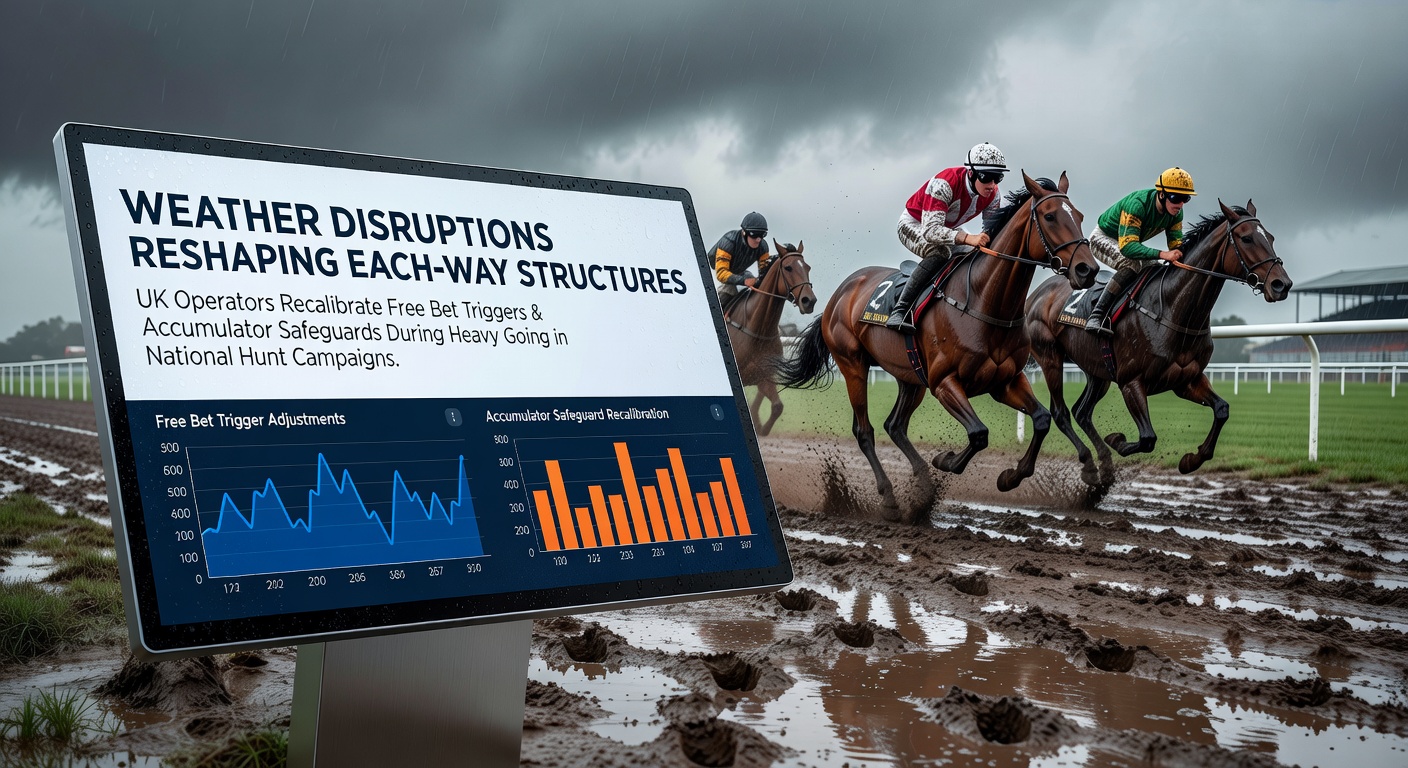
Weather Disruptions Reshaping Each-Way Structures: How UK Operators Recalibrate Free Bet Triggers and Accumulator Safeguards When Tracks Turn Heavy During National Hunt Campaigns
Heavy rainfall during National Hunt campaigns forces UK bookmakers to adjust each-way place terms because soft and heavy ground alters horse performance patterns in ways that affect payout structures across jump meetings. Operators monitor ground conditions reported by racecourse officials and recalibrate free bet triggers accordingly since certain selections become less reliable under prolonged wet spells while accumulators require added safeguards to balance liability exposure. Data from the 2025-2026 season shows these recalibrations occurring at multiple fixtures from late autumn through spring with particular intensity around February and March when persistent Atlantic systems keep many tracks on the soft side of heavy.
Ground Conditions Drive Structural Changes in Each-Way Offers
Each-way promotions in National Hunt racing typically pay three or four places on fields of eight or more runners yet heavy ground prompts operators to reduce place payouts to two places or tighten qualifying odds thresholds because front-runners and mud specialists dominate results more frequently. Research from the European Centre for Medium-Range Weather Forecasts indicates that soil moisture levels above 35 percent correlate with a 22 percent shift in finishing order predictability compared with good-to-soft conditions and bookmakers respond by amending terms in real time through their risk engines. Those adjustments appear most often at tracks such as Chepstow, Haydock and Carlisle where drainage limitations turn meetings into stamina tests that favor certain profiles while leaving others exposed.
Free Bet Triggers Undergo Recalibration During Wet Periods
Free bet mechanics tied to accumulator or each-way multiples often include minimum odds requirements that operators raise when heavy ground compresses the market because shorter-priced favorites become more common and reduce overall margins. Platforms activate revised triggers that demand an extra leg or higher cumulative odds when forecasts predict continued rainfall over a multi-day meeting yet these changes remain transparent through updated terms and conditions published ahead of each card. Observers note that such recalibrations occur alongside dynamic stake limits applied to individual horses whose past performances show strong records on testing ground while those with unproven wet-weather form face tighter caps until results confirm their suitability.

Accumulator Safeguards Adapt to Increased Uncertainty
Accumulator insurance and refund promotions linked to National Hunt bets incorporate ground-specific clauses that activate when official going reports reach heavy because correlation between expected and actual outcomes drops sharply under those conditions. Operators introduce leg-protection features that refund stakes on one non-runner or losing selection if the meeting is abandoned due to waterlogging or if early races produce extreme results that deviate from historical benchmarks. Figures released by the International Federation of Horseracing Authorities reveal that meetings abandoned or heavily altered by weather rose 14 percent in the five seasons ending May 2026 compared with the prior period and this trend drives the inclusion of weather clauses within standard accumulator rules at multiple major operators.
Those clauses function alongside revised cash-out valuations that reflect real-time ground updates because live odds move more dramatically when surface conditions deteriorate mid-meeting. Platforms integrate soil moisture sensors and radar data into their pricing models which allows them to flag potential recalibrations before the first race yet final decisions still rest with on-site clerks of the course whose declarations determine whether promotions remain active or switch to contingency terms.
Case Examples From Recent Campaigns
One January 2026 meeting at Kelso saw operators shorten each-way places from three to two after overnight rain turned the track heavy and simultaneously lifted the minimum odds requirement for free bet qualifiers from 1/2 to 4/5 across multi-race accumulators. A similar pattern emerged at Warwick in February when persistent showers prompted several platforms to add an extra selection to qualifying accumulators while extending cash-out windows to accommodate late ground updates. These examples illustrate how recalibrations remain event-specific yet follow consistent patterns driven by forecast reliability and historical performance data on heavy ground.
Conclusion
Weather-induced changes to each-way structures and accumulator safeguards during National Hunt campaigns reflect operators' ongoing efforts to align promotional terms with measurable shifts in race outcomes under heavy conditions. The recalibrations documented through the 2025-2026 season demonstrate systematic responses that incorporate meteorological inputs, historical benchmarks and real-time ground reports without altering core betting mechanics outside those parameters. As rainfall patterns continue to influence fixture scheduling through spring months these adjustments remain an established feature of UK betting operations tied directly to National Hunt racing.