Seasonal Adjustments in UK Operator Terms for Niche Event Wagering and Digital Payment Flows
Bianca Sullivan · Jun 10, 2026

Seasonal Adjustments in UK Operator Terms for Niche Event Wagering and Digital Payment Flows
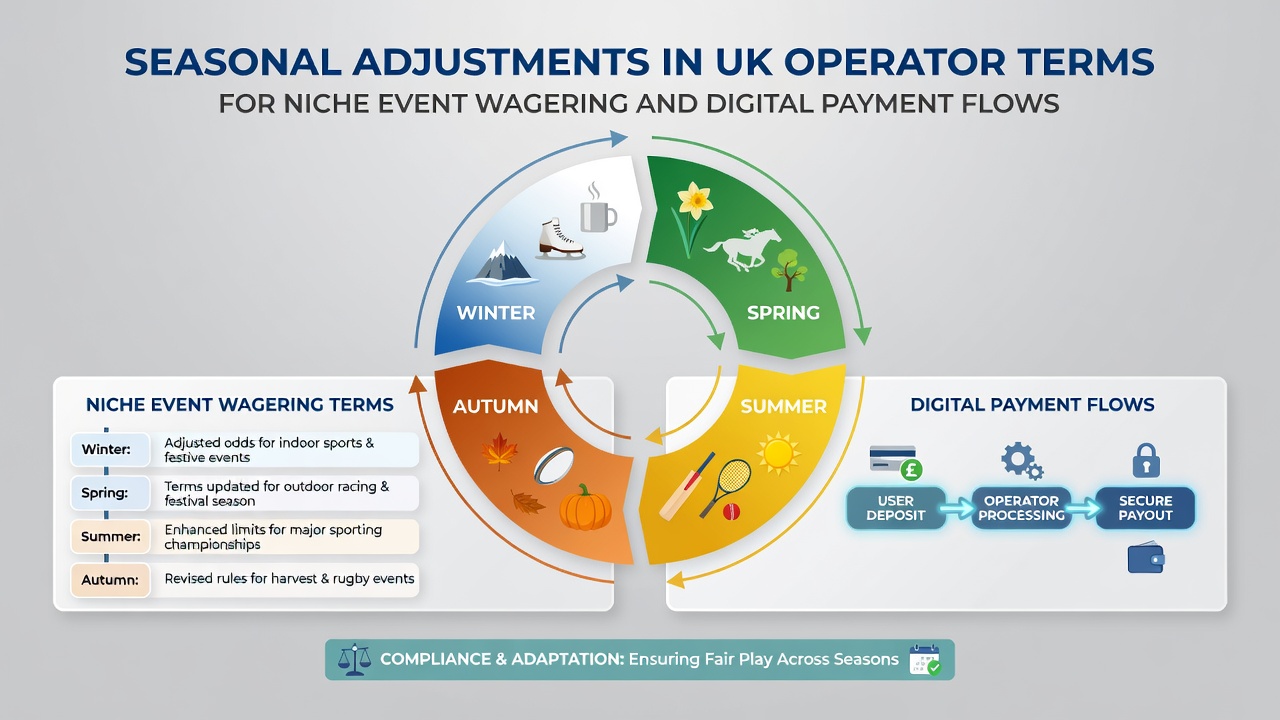
UK betting operators implement seasonal adjustments to their terms as a standard practice that aligns wagering conditions with fluctuating demand patterns across niche events and payment processing cycles, and these modifications often reflect broader shifts in regulatory expectations as well as technological updates in digital finance systems. Data from industry reports shows that such changes typically occur ahead of peak periods like summer tournaments or winter leagues, allowing platforms to recalibrate wagering requirements, minimum stakes, and settlement timelines for specialized markets that include lesser-known sports or virtual simulations.
Understanding Seasonal Term Modifications
Operators review and update their rulebooks multiple times each year to accommodate variations in event calendars, and this process involves recalibrating odds compilation protocols together with payout structures that tie directly into digital transaction volumes. Research indicates that adjustments become most pronounced during transitional months when traditional sports seasons overlap with emerging niche offerings, creating layered requirements that affect how bettors interact with specific markets. Observers note that terms related to voided bets or partial settlements frequently receive updates to reflect changes in event scheduling, while payment flow parameters such as deposit limits and withdrawal verification windows undergo parallel revisions to maintain compliance with evolving financial standards.
June 2026 stands out as a notable period because multiple niche events converge then, including early rounds of international cricket tours alongside specialized esports competitions, prompting operators to introduce temporary clauses that govern accumulator structures and live in-play adjustments. These modifications often specify new thresholds for digital payment approvals, ensuring that funds move through verified channels without delays during high-traffic windows. Figures from payment processing analyses reveal that transaction success rates improve when operators align their seasonal terms with real-time banking data feeds, reducing friction in both deposit and settlement phases.
Niche Event Wagering Dynamics
Niche event wagering covers markets outside mainstream football and horse racing, encompassing areas such as darts exhibitions, snooker qualifiers, and regional athletics meets, and seasonal adjustments ensure that operator terms remain proportionate to the scale and unpredictability of these fixtures. Experts have observed that terms governing maximum payouts or risk exposure caps tend to tighten during summer months when outdoor events dominate schedules, whereas winter periods see expansions in virtual event offerings with corresponding payment flow optimizations. One study revealed that platforms which synchronize their niche market rules with seasonal demand data achieve steadier user engagement across digital channels, particularly when payment providers introduce updated authentication protocols mid-year.
Adjustments also address how accumulators spanning multiple niche categories interact with bonus eligibility criteria, and these updates frequently incorporate new language around settlement times that depend on digital ledger confirmations. Those who've examined operator documentation find that clauses related to event cancellations receive particular attention ahead of unpredictable seasons, with payment refund mechanisms tied to automated verification systems that process claims faster during peak adjustment windows. What's interesting is how these changes create ripple effects across digital payment ecosystems, where operators must coordinate with third-party processors to maintain seamless flows even as wagering terms evolve.
Digital Payment Flow Adaptations
Digital payment flows represent a critical component of seasonal term adjustments because they determine how quickly funds enter and exit wagering accounts tied to niche events, and operators routinely revise verification procedures to match fluctuations in transaction patterns. According to findings from the European Gaming and Betting Association, platforms that integrate adaptive payment rules experience fewer interruptions during high-volume periods, especially when niche events generate sudden spikes in activity. These adaptations include modifications to e-wallet processing speeds and card authorization windows, often aligned with broader economic indicators that influence consumer spending rhythms throughout the year.
Payment providers and operators collaborate on seasonal frameworks that specify new security layers for transactions linked to specialized markets, and such frameworks help prevent discrepancies between wager placements and fund movements. Data shows that adjustments implemented ahead of June 2026 events will likely emphasize faster reconciliation for instant payment methods while maintaining rigorous checks on slower channels, ensuring balanced risk management across all digital pathways. Researchers discovered that coordinated updates between wagering terms and payment protocols lead to more predictable settlement outcomes, particularly when operators publish revised guidelines well in advance of event clusters.
Industry Coordination and Compliance Patterns
Industry coordination plays a central role in how UK operators manage these seasonal shifts, with trade groups facilitating knowledge exchange on best practices for aligning niche wagering rules with digital finance standards. Reports from the Canadian Gaming Association highlight similar patterns in other jurisdictions where payment flow adjustments accompany term revisions, suggesting a global convergence toward integrated compliance models. Operators frequently test new term configurations during off-peak intervals before rolling them out for major niche seasons, allowing time to refine payment interfaces and reduce potential friction points.
Those monitoring these developments point out that documentation updates often include clearer language around multi-currency support and cross-border transaction handling, which becomes especially relevant when niche events attract international participants. Seasonal adjustments therefore serve as mechanisms that keep both wagering conditions and payment infrastructures responsive to changing market conditions without requiring complete overhauls each cycle.
Conclusion
Seasonal adjustments in UK operator terms continue to shape the intersection of niche event wagering and digital payment flows through structured, recurring updates that respond to calendar-driven demands and technological advancements. These modifications maintain operational consistency while supporting the specialized requirements of diverse markets and transaction systems, and their implementation reflects ongoing collaboration between operators, regulators, and payment providers. As June 2026 approaches, further refinements are expected to address emerging event schedules alongside evolving digital finance protocols, ensuring that terms remain aligned with both wagering practices and payment efficiency standards across the sector.