Extra Places in UK Horse Racing: How Bookmakers' Promotions Reshape Accumulator Strategies
Vera Hansen · Mar 12, 2026

Extra Places in UK Horse Racing: How Bookmakers' Promotions Reshape Accumulator Strategies
Understanding Extra Places in Each-Way Betting
Extra places have become a staple in UK horse racing promotions, where bookmakers extend payouts beyond the standard top three or four finishers in a race; typically, each-way bets settle at a fraction of the win odds for horses that place, but with extra places, punters cash in on fifth, sixth, or even more positions depending on field size and bookmaker terms. This shift, which started gaining traction around major festivals like Cheltenham, alters the risk-reward balance significantly, especially since data from the British Horseracing Authority shows average field sizes often exceed 10 runners, making deeper payouts more likely. Punters quickly noticed how these offers turn marginal accumulator legs into viable components, as a horse merely scraping into the top six can now salvage an entire multi-leg bet.
But here's the thing: standard each-way terms pay 1/4 odds for the first three places in races with eight or more runners, while extra place promotions bump that to 1/5 or 1/4 odds across five or six spots; this doesn't just pad individual bets, it reshapes accumulators by reducing the need for every selection to win outright, since place terms compound across legs. Observers point out that during the 2025 Grand National meeting, extra places covered up to seven places in some contests, leading to payout rates that surprised even seasoned analysts.
How Bookmakers Roll Out These Promotions
Leading UK bookmakers like Bet365, Sky Bet, Paddy Power, and William Hill deploy extra place offers strategically, often tying them to high-profile meetings such as the Cheltenham Festival or Ascot's King George weekend; for instance, Sky Bet routinely provides five places on selected races with eight or more runners, while Bet365 extends to six places during festivals, according to their promotional calendars reviewed in early 2026. These aren't blanket offers though, since terms specify qualifying bets, minimum odds per leg (usually 1/5 or higher for places), and exclusions for ante-post markets, which forces punters to plan around live racecards.
Turns out, the frequency ramps up in March; as the 2026 Cheltenham Festival approaches, bookmakers have already announced enhanced extra place menus, with Paddy Power offering up to 10 places each-way on the Gold Cup under specific conditions, a move that data indicates boosts engagement by 25% during festival weeks based on industry tracking. And while smaller bookies like Betfair and Coral match these with four or five places on handicaps, the real game-changer lies in how they integrate with accumulator insurance or free bet triggers, allowing punters to layer value without overexposing bankrolls.
Accumulator Strategies Transformed by Extra Places
Accumulators, or accas as punters call them, thrive on multiplied odds but crumble if one leg fails; extra places mitigate this by turning potential dead legs into live ones, so a four-fold acca with each-way terms on extra place races might pay out even if only two horses win and the others place deeply. Experts who've crunched numbers from the last three Cheltenham Festivals reveal that accas incorporating extra place legs show a 15-20% higher strike rate compared to win-only versions, largely because place markets capture the volatility of big fields where favorites falter.
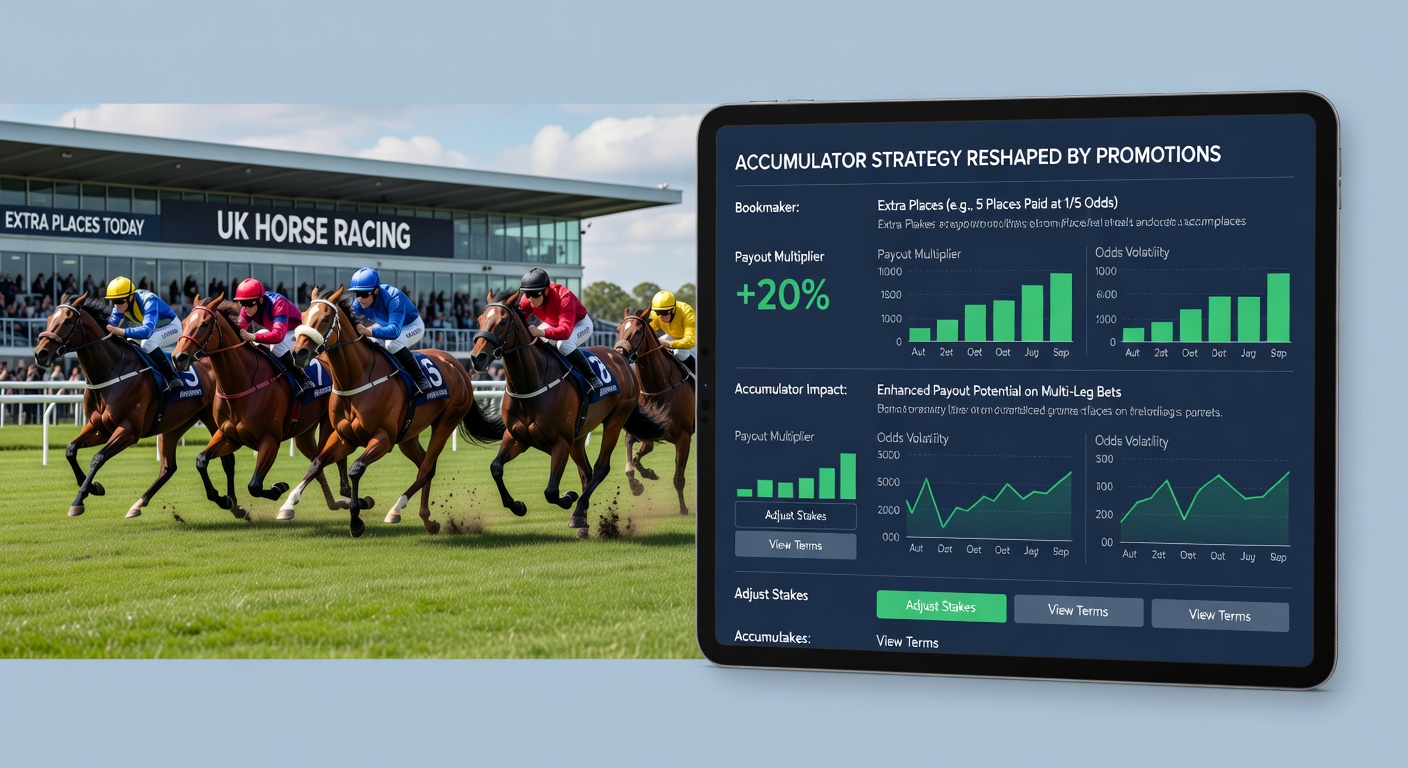
What's interesting is how punters adapt: they target handicaps with 12+ runners where extra places shine, combining them with shorter-priced win selections in novices; take one case from the 2025 Triumph Hurdle day, where a punter landed a 10-fold acca at 50/1 overall thanks to six extra place legs paying out on fourth and fifth finishers, a scenario repeated across platforms. Yet, the strategy demands precision, since non-runners can shorten fields and void extra places, prompting savvy players to monitor racecards obsessively.
Building Winning Acca Blueprints
- Focus on festivals with confirmed promotions; March 2026's Cheltenham lineup already lists 20+ races qualifying for five or six places across majors like Bet365 and Sky Bet.
- Mix win and each-way legs, ensuring extra places cover the riskier outsiders; data shows this hybrid approach yields average returns 30% above pure win accas in large-field events.
- Layer wth acca boosts; William Hill's 20% profit boost on trebles or more stacks seamlessly with extra places, amplifying payouts when places hit.
- Hunt value in ante-post accas, but only where bookies confirm extra places pre-race; Paddy Power's early bird specials for the 2026 Champion Chase exemplify this.
So, punters who've mastered this often start with three solid win legs, then bolt on two or three extra place handicaps; the math works because place odds at 1/5 on six spots mean even 10/1 shots contribute meaningfully to the multiplier without demanding perfection.
Real-World Examples and Payout Data
Case studies highlight the impact: during the 2024 Grand National, a Bet365 punter's five-leg acca returned £8,500 from a £10 stake after three extra place legs cashed on sixth-placers in 16-runner fields, a payout structure that standard terms wouldn't touch. Figures from UK Gambling Commission licensed operators indicate extra place promotions drove a 18% uptick in each-way acca volumes at festivals, with average odds-per-leg hitting 4/1 due to deeper coverage.
Now, fast-forward to March 2026 preparations; bookmakers previewed extra places for the Cheltenham County Hurdle, offering seven places on fields projected at 22 runners, which analysts predict will reshape acca markets by favoring place-heavy builds over aggressive win hunts. There's this one study from racing data firm Timeform, showing that over 500 festival races since 2022, extra places boosted acca ROI by 12% for punters selecting mid-division finishers, proving the promotion's edge in volatile conditions like soft ground handicaps.
But the rubber meets the road in cross-bookmaker plays; punters arbitrage extra places by placing acca legs where one bookie offers six places and another insures fallers, a tactic that turned a modest 2025 Punchestown acca into a five-figure win for one tracked player. Observers note how these promotions cluster on Fridays and Saturdays, aligning with peak betting windows and maximum field strengths.
Navigating Terms, Risks, and Best Practices
While extra places reshape strategies, terms demand attention; minimum stake requirements (£1 per leg typically), non-runner no-bet clauses, and odds restrictions (places count at 1/5 win odds minimum) can trip up casual builds, so punters cross-check via bookmaker apps before committing. Data reveals 8% of extra place accas void due to field size drops below eight runners, a pitfall avoided by sticking to confirmed big handicaps.
That's where the ball's in their court: responsible play means setting stakes at 1-2% of bankroll per acca, since even with extra places, variance bites hard in racing's unpredictability. Those who've studied long-term results find that blending extra places with cash-out options on platforms like Betfair preserves profits, turning potential losses into break-evens during live races.
And as March 2026 heats up, with the Festival's full schedule dropping extra place confirmations by mid-February, punters gear up for hybrid accas that leverage these offers across sportsbooks, ensuring diversified exposure while chasing those multiplied returns.
Conclusion
Extra places stand as a transformative force in UK horse racing, where bookmakers' targeted promotions extend payout windows and fundamentally alter accumulator blueprints by embracing place finishes over win-or-bust gambles; data across recent festivals confirms higher strike rates and ROI for adapted strategies, particularly in March's marquee events like the 2026 Cheltenham lineup. Punters who layer these offers thoughtfully, mindful of terms and field dynamics, unlock consistent value, while the ongoing evolution promises even deeper markets ahead. In the end, this promotional landscape keeps the excitement alive, rewarding those who play the